

Balaka, Malawi – In a compelling testimony to the power of faith-driven development, the Catholic Development Commission (CADECOM) of the Diocese of Mangochi recently organized a media tour to showcase its transformative projects in Balaka District. Supported by Trocaire and funded by Irish Aid, these initiatives are strengthening local communities, promoting environmental stewardship, and building resilience against climate change.
During the tour, Journalists visited project sites in the areas of Traditional Authorities Phalula and Chanthunya, where they witnessed the tangible fruits of CADECOM’s interventions. From innovative farming practices to women-led enterprises, the stories shared reflected a renewed sense of dignity, self-reliance, and hope.
Livelihoods Restored through Livestock and Agriculture
In Group Village Headman Chizungu, the team observed the Goat Pass-On Programme, a model of community solidarity in which beneficiaries share livestock to expand its impact. Twenty families are already participating. Among them is Mr. Madalitso and his wife from Mpitanjala Village, who expressed deep gratitude for the goats received. Beyond offering a means of income, the animals provide manure that enriches their vegetable garden, generating daily revenue for the household.

Caring for Creation: Catchment Conservation and Energy Saving
At another site, beneficiary Mr. Raphael Tadeo testified to the effectiveness of catchment conservation practices in preventing soil erosion and enhancing water retention. “Since joining the project, my yields have improved significantly,” he shared.
Meanwhile, in GVH Govati, women like Mai Esther Phambala spoke about the impact of energy-saving stoves, which reduce firewood consumption, protect the environment, and save women countless hours that would otherwise be spent gathering wood. Conservation agriculture techniques, such as mulching, are also enriching the soil and lowering farming costs, according to lead farmer Mr. Hosea Nkhalika.
Food Security through Deep Bed Farming and Kitchen Gardens
In GVH Phalula, the introduction of deep-bed farming and kitchen gardens has improved household food security and provided new income streams. Woman Village Head Njiragoma highlighted how the kitchen garden initiative has become a “game-changer” for her community, allowing families to sell vegetables and make plans.
Expanding Horizons: Beekeeping and Orchard Farming
In GVH Maitoni, villagers are engaged in beekeeping, goat farming, and fruit orchard cultivation. The beekeeping initiative, in particular, has gained recognition for its high-quality, well-packaged honey, which is already prepared for the market. The group’s ambition to establish its own processing factory signals a bold step toward sustainable enterprise.
Women Leading Change: The Tikondane Group
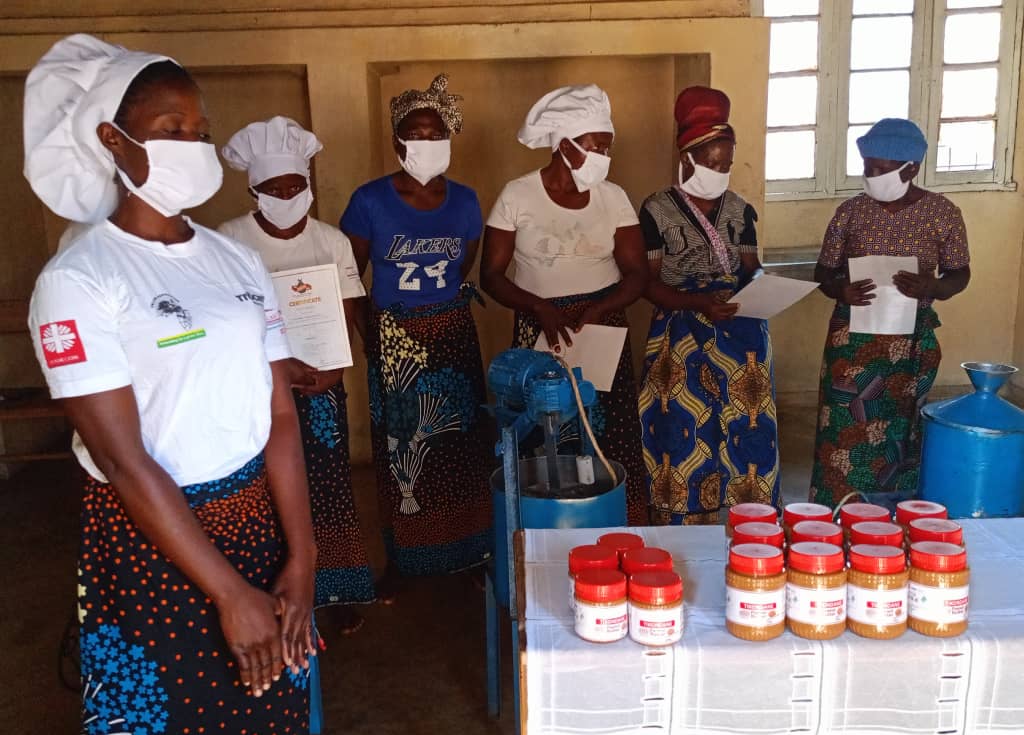
A highlight of the tour was the visit to the Tikondane Women Group in Kankao, under the leadership of Traditional Authority Chanthunya. Supported by CADECOM, the 20-member group has built a successful peanut butter business, generating substantial income and reinvesting in livestock. The women are currently constructing their own factory building—a milestone in their pursuit of independence and growth. Their initiative stands as a shining example of women’s empowerment, community solidarity, and entrepreneurial spirit.
A Mission of Solidarity and Hope
As the tour concluded, the overarching message was clear: CADECOM’s work is planting seeds of hope and resilience across Balaka. The five-year project demonstrates a long-term commitment to integral human development rooted in the Church’s mission of service.
As Pope Francis teaches in Laudato Si’, “Intergenerational solidarity is not optional, but rather a basic question of justice” (159). CADECOM’s initiatives embody this principle, ensuring that today’s efforts to care for creation and empower communities will bear fruit for generations to come.
Report by Fr. Francis Kachere
Communications Secretary, Diocese of Mangochi